- 1. Why Yamatomichi Keeps Pulling Me Back
- 2. From an Art Book Producer's Apartment to Kamakura's Mountains
- 3. One Question, Three Packs
- 4. Beyond the Pack: The Gear That Made the Community
- 5. Works That Made the Name
- 6. Crossing the Water: The UK Arrival
- 7. The Brand That Publishes Its Own Failures
- 8. Still Walking: What Yamatomichi Means, Now
1. Why Yamatomichi Keeps Pulling Me Back
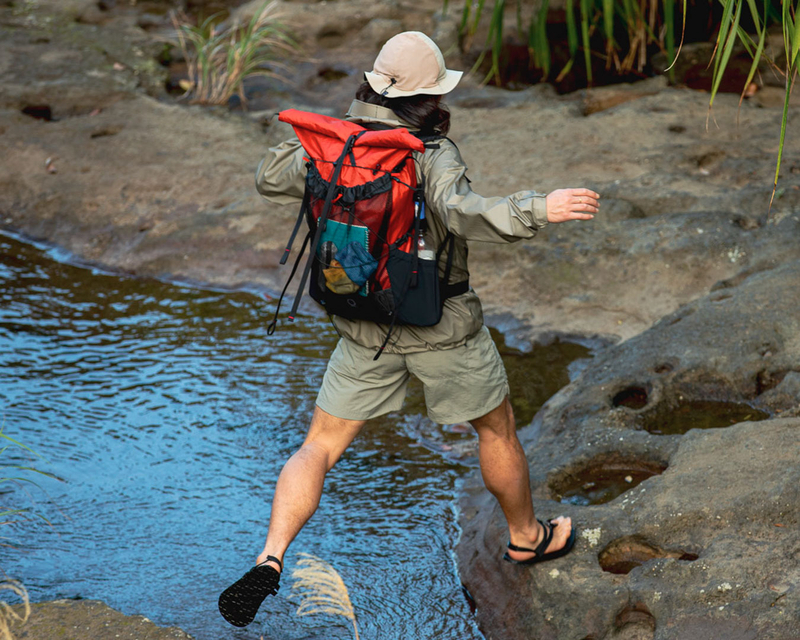
There's a particular kind of embarrassment known only to hikers who've tried to go ultralight without really understanding it. Mine happened somewhere in the Northern Alps — one of those punishing summer ridgelines where the trail drops 600 metres before climbing another 800 — with a foam pad strapped to the outside of my pack, bouncing with every step, slowly loosening, gradually becoming a source of existential shame. I'd bought the cheapest closed-cell foam I could find. It worked, technically. It just didn't feel considered.
That's the word that keeps coming back to me when I think about Yamatomichi: considered. Every product they make carries the weight of years of deliberation. A prototype that gets abandoned because it's 90% right but not 100%. A padded hip belt that gets stripped back to bare webbing after a thru-hike proved the padding was restricting movement more than it was helping. A foam sleeping pad that took half a decade to release, because founder Akira Natsume wasn't satisfied until it was, in his own words, genuinely the best he believed possible.
For a lot of Western UL hikers, Yamatomichi is a brand they've heard of — whispered reverently on r/ultralight or spotted on a thru-hiker's back on the Appalachian Trail — but never quite been able to get their hands on easily. That changed in April 2026, when Yamatomichi made their official UK debut through Outsiders Store. Akira himself flew from Kamakura to London and Manchester, ran workshops, walked the Peak District with locals, and introduced his brand not just as a product line but as a philosophy. That journey — from a small apartment in Kamakura to Coal Drops Yard — is worth understanding in full.
2. From an Art Book Producer's Apartment to Kamakura's Mountains
Yamatomichi was founded in 2011 by Akira Natsume and his wife Yumiko. The backstory is one of those rare ones that actually explains why the products are the way they are.
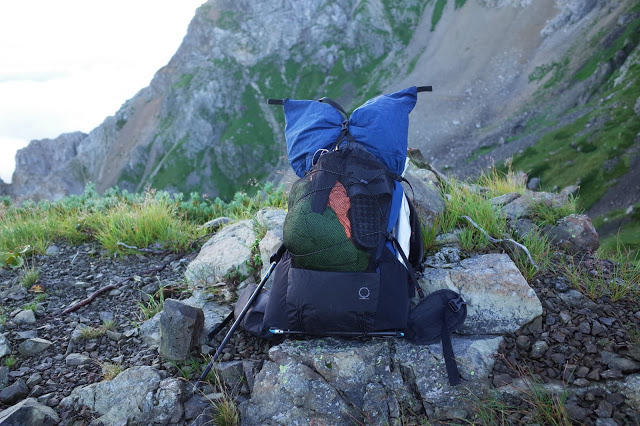
Akira's professional background was in art book production — curation, design, the discipline of presenting complex ideas with economy and intention. Yumiko was a professional in stage costume design, someone who understood how fabric behaves under movement, how a garment needs to function as well as look right. Neither of them came from the outdoor industry. Neither of them had connections to manufacturers. What they had was an intimate understanding of how things should work, and a deep frustration with the gap between what was available and what they actually needed on the mountain.
In 2011, Japan had no meaningful ultralight hiking culture. The dominant gear on the trails was heavy, the philosophy was safety-through-mass, and the assumption was that a proper mountain pack needed a rigid frame and a padded hip belt system that locked the load onto the hips. Akira, who had been following the American UL movement closely — the work of Ray Jardine, the cottage industry boom in the US — believed that something different was possible. So he started making it himself, out of a small apartment in Kamakura.
The name 山と道 (Yamatomichi) is itself a considered act of language. Literally, it reads "mountain and path." But in Japanese, it carries a weight of meaning closer to "the way of the mountain" — a life oriented around walking in the hills, not just visiting them. The brand's tagline, "We are hikers. We make and use our own gear," is not marketing copy. It is the literal operating procedure.
What strikes me about this origin story is how much it explains the pace of the brand's development. Yamatomichi has never chased growth as an end in itself. They have explicitly stated that excessive growth would compromise their ability to make the gear they actually believe in. This is a brand that sometimes takes five years to release a single product. The UL Pad 15+ — now regarded as one of the finest closed-cell foam sleeping pads available anywhere — was prototyped, tested, revised, and held back from release for years because the formula wasn't quite right. For a small brand trying to generate revenue, that kind of patience is unusual to the point of being almost irrational. It's also why, when something does finally come out, it tends to be worth waiting for.
3. One Question, Three Packs
The question Akira kept returning to in the early days of Yamatomichi was this: why do frameless ultralight packs so often feel unstable? The common critique was that going frameless meant the load swinging away from your back, the centre of gravity shifting unpredictably, the constant micro-corrections that drain energy over a long day. The American response was generally to carry less weight — problem solved by removal. Akira wanted to solve it structurally.
The answer he developed with the ONE — the brand's first backpack, released in 2011 — was the carbon X-frame. Where aluminium stay frames run vertically, transmitting load downward, the X-shape distributes tension diagonally, allowing the pack to maintain contact with the torso through a range of movement. The frame wasn't the first prototype solution — early versions tried aluminium — but the carbon X eventually emerged as the optimal balance between weight, rigidity, and flexibility. The ONE remains in the lineup today as Yamatomichi's flagship technical backpack, now available as a regular product rather than the custom-order-only item it was for much of its early history.
But the more revealing design evolution is the story of the THREE, which Akira describes in detail on the product page in a way that most gear brands would never bother with. He was initially trying to make a "TWO" — a downsized ONE. He wasn't satisfied with the prototypes. He abandoned the concept. He then pursued a different angle: what if the THREE was not a smaller ONE but a larger MINI — the brand's second backpack, designed to distribute load to the upper torso rather than the hips? What emerged was something with a padded hip belt. After a thru-hike in the Northern Alps for product testing, he concluded that the padding was limiting waist movement. He stripped it back to 38mm webbing. The result is a frameless pack that still transfers roughly 30% of its load to the waist — not through padding and stiffness, but through geometric engineering of the pack's shape and how it sits on the body.
This is what I mean by "considered." The THREE is not a compromise. It is the result of somebody walking hundreds of kilometres with prototypes and being willing to throw away an entire design direction because it wasn't right.
The MINI and MINI2 represent the other pole of this philosophy: absolute minimalism in load-carrying. The MINI2 is frameless with no waist support to speak of — it loads the upper torso, the shoulder blades, the chest — and frees the hips entirely. The design logic is that for loads under approximately 8 kg, you do not need hip transfer. What you need is mobility. On steep Japanese terrain with scrambling sections, a fixed hip belt is often actively unhelpful.
The Material Equation: ECOPAK, X-Pac, and Pertex in Dialogue
For the THREE, Yamatomichi currently offers two fabric options that represent genuinely different engineering philosophies, not just marketing colour variations:
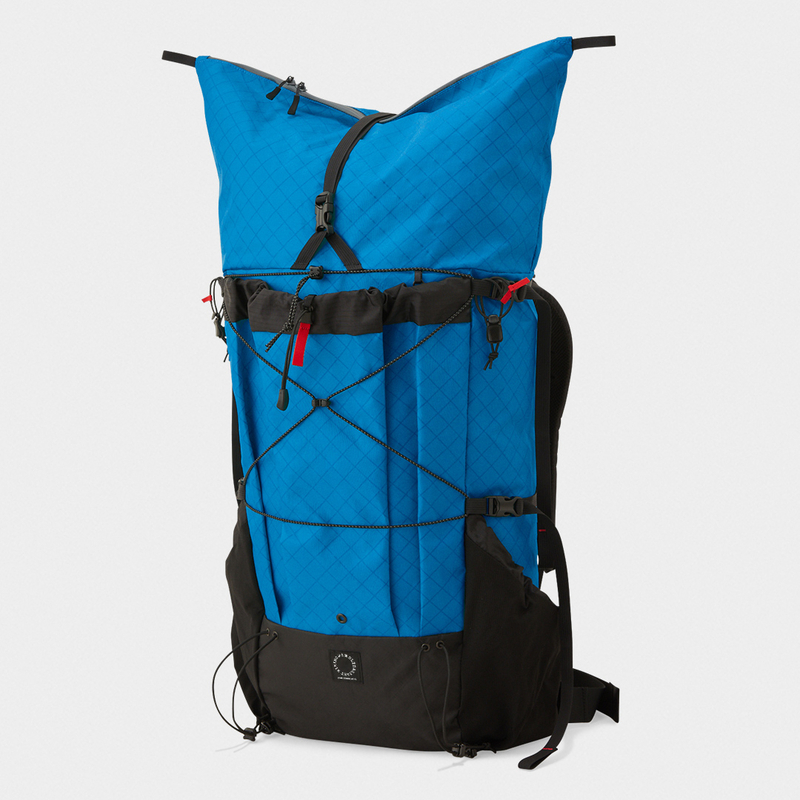
ECOPAK EPX200 is the durability-first choice: a multi-layer laminate of 200D recycled polyester with a diamond-weave polyester cross-ply and a 70D ripstop backing. The "eco" in ECOPAK is not greenwashing — the material is 100% recycled polyester. The multi-layer construction provides genuine waterproof resistance without a seam-taped shell, and the 200D face fabric handles abrasion better than most UL alternatives. The trade-off is weight: EPX200 is a denser material.

X-Pac UX10 sits at the opposite end. At 85g/m², it is the lightest laminate in the X-Pac lineup. The face fabric is 100D Ultra-PE (UHMWPE — the same ultra-high-molecular-weight polyethylene used in cut-resistant gloves and ballistic armour), finished with a ciré coating for initial abrasion resistance and water repellency. The X-Ply reinforcement is aramid fibre. The backing is a 0.5 mil polyester film. In the hand, fresh out of the box, UX10 has a slightly stiff, papery quality — that's the ciré finish. With use, it softens into something more supple. The long-term caveat Yamatomichi is admirably transparent about: the laminate on UHMWPE fabrics can delaminate at points of repeated flexion over years of use. They say this plainly on their product page, which tells you something about how they communicate with their customers.
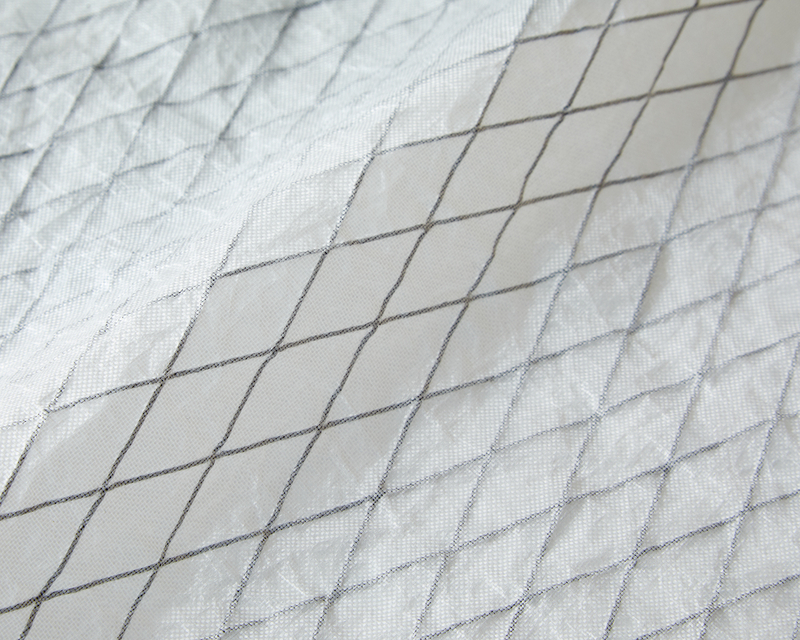
The MINI2 takes a different approach again. The current generation uses a Pertex-co-developed proprietary body fabric with a polycarbonate coating for hydrolysis resistance, with reinforcement zones in Technoforce Steel — a 100% UHMWPE fabric from Toyobo that appears at the base and in the pockets, precisely where abrasion is most likely.
4. Beyond the Pack: The Gear That Made the Community
The sleeping pad situation in Japan in 2011 was, by UL standards, desperate. Imported Therm-a-Rest Z-Lites were expensive to bring over. Closed-cell options were limited. Akira set out to make the definitive Japanese CCF pad, and the UL Pad 15+ is what emerged — eventually.
The material is XLPE (cross-linked polyethylene) foam, which is a step above the standard EVA foam in most cheaper CCF pads. XLPE has a higher closed-cell density, meaning the foam cells don't collapse as readily under repeated compression. The result is a pad that's noticeably firmer than a Z-Lite — which some users find uncomfortable, particularly side sleepers — but that retains its loft and insulation values more consistently over time. The "15+" designation refers to the 15mm thickness of the top layer, with the plus indicating a surface texture that improves durability over the original smooth-face version.
In the UL community, the UL Pad sees heavy use as both a solo CCF system and as the structural insert in Yamatomichi's own frameless packs. The back pad in the THREE and MINI is literally the same foam, cut to fit the pack, removable for use as a sleeping pad when you reach camp. This kind of systemic thinking — where two components are actually one component doing double duty — is exactly the kind of gram-counting that doesn't show up in a spec sheet but matters enormously on a 10-day traverse.
The 5-Pocket Shorts deserve their own mention, because they represent the same discipline applied to clothing. Released in 2013, they exist because of a question most hikers don't articulate until they're already annoyed: where do you put your phone on a mountain?
In Japan, navigation apps are non-negotiable and weather windows close fast. A phone bouncing in an unsecured pocket or buried in a hip belt zip costs seconds you can't afford at the wrong moment. The 5-pocket system's answers to this:
- The smartphone pocket sits just behind the hipbone — at the body's centre of rotation, it barely moves during a scramble, and you can reach it without dropping your poles
- The map pocket (which doubles as a water bottle holder when you don't need the map) keeps a full A4 sheet folded and accessible without breaking stride
- Mesh pocket liners drain rather than hold moisture; long zipper tabs work with gloves on
The 2026 update revised the waistband to stop it twisting under sustained load. This is not a pocket revolution. This is years of attention to a specific inconvenience.
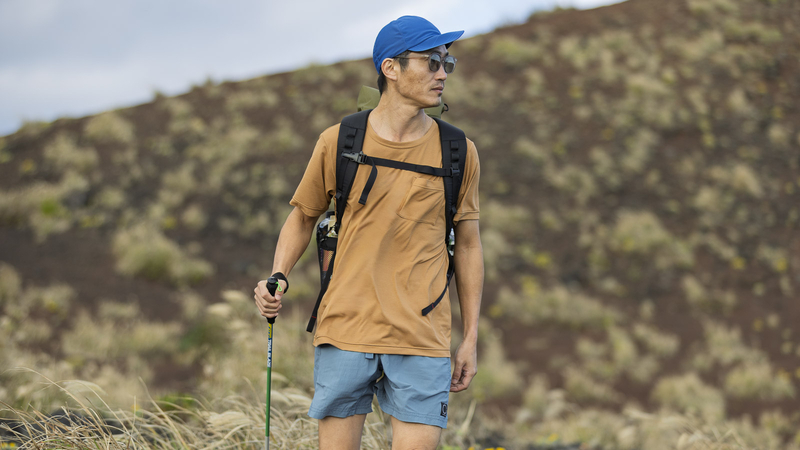
Then there's the Chemical B Series — Yamatomichi's first synthetic base layer, released in 2025, and easily the most technically ambitious thing they've made outside of a backpack.
The interesting part of the Chemical B story is where it starts: with merino wool. For years, Yamatomichi championed merino as the only base layer worth wearing in the mountains — odour-resistant, moisture-regulating, temperature-buffering. The brand ran a year-long internal research project from 2019 to 2020 called Yamatomichi Lab: Base Layer Edition, working through the history and chemistry of base layer materials across six published reports. The conclusion wasn't that merino was wrong. It was that synthetic had one genuine structural advantage — it doesn't cling to the skin when wet — and that this advantage was worth pursuing if, and only if, the odour problem could actually be solved.
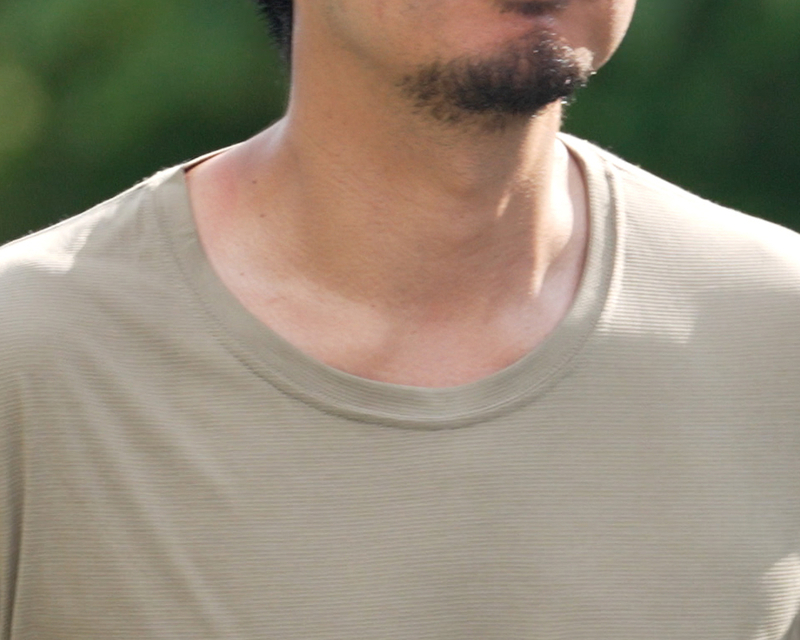
Most synthetic odour treatments work by applying an antibacterial finish to the fabric surface. The problem is that sweat tends to raise the pH of fabric to an alkaline state, which is exactly the environment where odour-causing bacteria thrive. The treatments slow the process, but they don't address the underlying chemistry — and they degrade with washing.
Yamatomichi's solution, developed in partnership with Teijin Frontier, goes further. The yarn itself — using Teijin's Type EP pH-control technology — is manufactured to remain mildly acidic at the fibre level. Rather than fighting bacteria after they appear, the fabric makes the surface inhospitable to them in the first place. Teijin's internal testing shows the effect holds through 100 wash cycles. The knit structure, built on Teijin's DELTAPEAK™ platform, adds a point-contact architecture that lifts the fabric slightly away from the skin — meaning that even when soaked, the shirt doesn't plaster itself to your back and pull heat away from your body.
What the product page is honest about is what Chemical B can't do: it's less effective against acidic odour compounds like butyric acid, and performance varies because everyone's sweat pH is slightly different. Yamatomichi conducted litmus paper tests on over 100 sweat samples and found no clear pattern. They published this openly, which tells you more about the brand's communication style than any marketing claim could.
The real-world evidence is striking. A Yamatomichi Kamakura store manager wore the Chemical B Sleeveless on a 600 km thru-hike across Iceland and, by his own account, didn't change the shirt for 22 consecutive days — through hiking and sleeping — without encountering the sharp, plastic synthetic smell that characterises most technical base layers after three days of heavy use. A TJAR 2024 (Trans Japan Alps Race) competitor wore the Sleeveless for the entire race and found the fabric showing no pilling or fraying at the end of it. These are not controlled test conditions. They are the conditions under which ultralight gear either proves itself or doesn't.
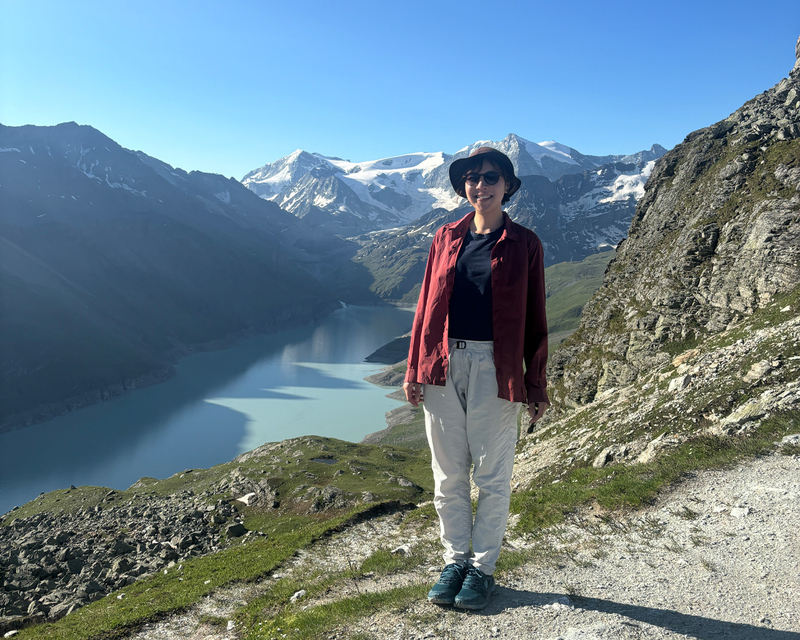
The development from the first prototype to final product took five years. For a brand that had built its identity around natural fibres, that's not a pivot — it's a considered expansion, with the research to back it up.
5. Works That Made the Name
ONE — The Carbon X-Frame Flagship
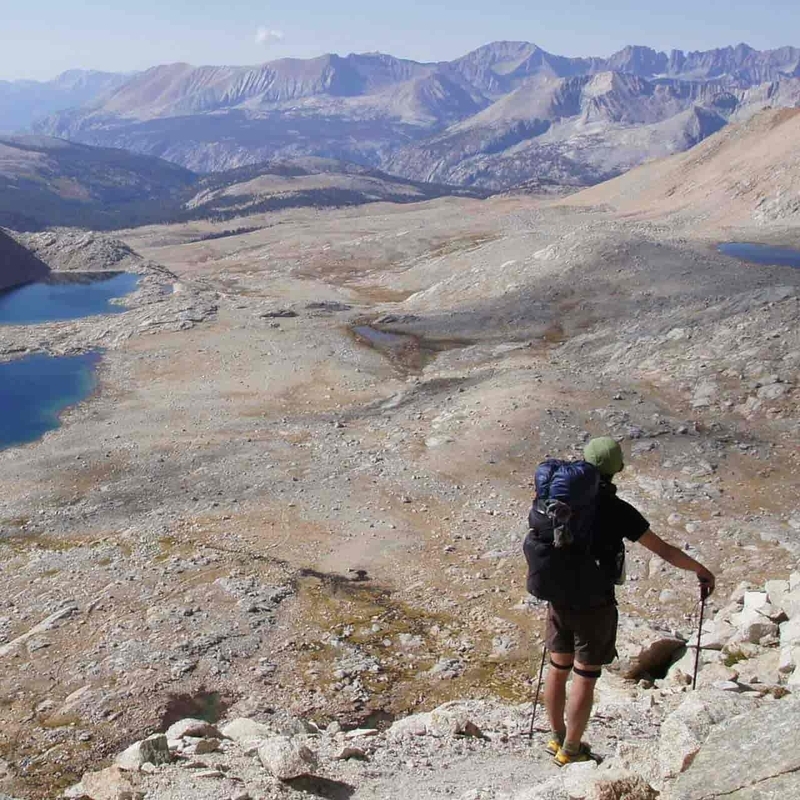
- Weight: body only 570–612g (size 45–57cm torso, 2025 model); add hip belt (116–137g depending on size) for total carry weight
- Capacity: 50–55L (variable, top-loader with large front pocket)
- Frame: Carbon X-frame, removable
- Best use: Multi-day to week-long hikes, heavier loads up to ~15 kg, any terrain where load control matters
The ONE is where everything started and where the brand's technical ambition is most clearly visible. The carbon X-frame is not gimmick engineering — it's a genuine structural solution to the problem of load control in a pack that comes in well under 1 kg. The large front zippered pocket is a signature detail: accessible even with the pack on the body, and positioned to avoid pulling the load distribution off-axis. Available as a regular product now, after years of custom-order-only status.
MINI2 — Maximum Mobility, Minimum Everything
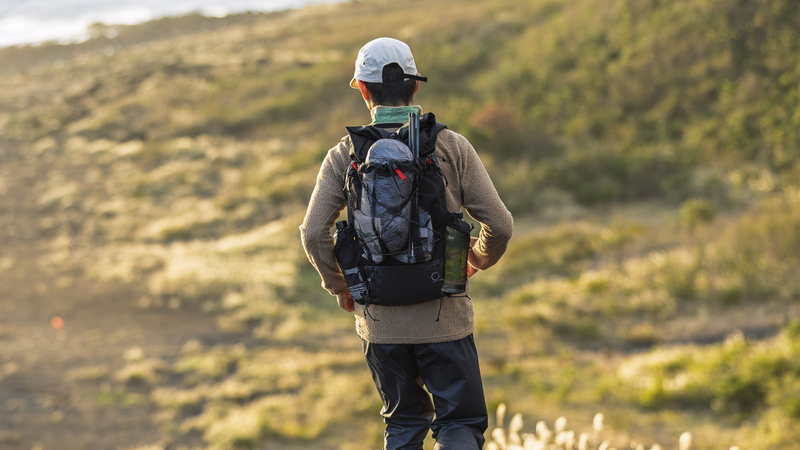
- Weight: approximately 360–430g (varies by year and fabric)
- Capacity: 25–35L (M) / 28–38L (L)
- Frame: Frameless, upper-torso load transfer
- Main fabric: Proprietary 70D HT PC Coated Ripstop Nylon body / ECOPAK EPX200 bottom
- Best use: 1–2 night fastpacking, trail running with overnight kit, loads under 8 kg
The MINI2 is the pack that made Yamatomichi's reputation in the Japanese UL community. Under 400g with room for a multi-day kit in the right hands, it does something that sounds impossible until you try it: it carries a loaded pack without you really noticing it's there. The key is the upper torso load distribution — your hips are free, your stride is unimpeded, and on technical terrain you don't feel the weight trying to drag you off-balance. The trade-off is real: put more than about 8 kg in this pack and you will feel it in your shoulders. This is a pack that rewards disciplined packing, not just wishful thinking.
THREE — Freedom with Capacity
- Weight: 554–715g (varies by size and fabric variant)
- Capacity: 40L (M) / 45L (L)
- Frame: Frameless, upper hip and torso load transfer via 38mm webbing belt
- Fabrics available: ECOPAK EPX200 / X-Pac UX10; front pockets in Standard, Mesh, or Zip
- Best use: Multi-day to week-long hikes, loads up to ~10 kg, variable Japanese weather
The THREE is arguably the most versatile backpack in the Yamatomichi lineup and the one I'd recommend first to someone coming to the brand from a conventional outdoor background. It has enough structure to feel familiar, enough capacity for real multi-day trips with hut-based food resupply, and enough weather resistance (particularly the EPX200/Zip combination) for Japan's genuinely unpleasant summer storms. The choice of front pocket type is not cosmetic — it changes the pack's character. The Mesh version is the UL-purist choice, but in Yakushima-level rainfall, the Zip version earns its keep.
6. Crossing the Water: The UK Arrival
In April 2026, Yamatomichi landed in the UK. Akira Natsume flew in with his team and spent five days in London, Manchester, and the Peak District — presenting, packing, hiking. Outsiders Store, which already carried brands like Patagonia and Arc'teryx alongside more specialist UL options, became the official UK stockist. The London event at Coal Drops Yard, the Manchester talk, the community hike near Edale: these were not product launches in the conventional sense. They were seminars.
This matters because it reflects something essential about how Yamatomichi approaches expansion. They don't wholesale into a market and wait for the sales figures. They send the founder. They run workshops. They make sure the people who are going to be using the gear understand what the gear is for and why it's built the way it is. The HLC — Hike/Life/Community — model, which began in Japan as a network of local hiker groups sharing knowledge and building trail culture, is something Yamatomichi clearly intends to extend internationally, or at minimum to model internationally.
For UK hikers, this timing is interesting. The Long Distance Walkers Association has been steadily growing its UL-curious membership. The Spine Race and other ultras have created a class of hikers who have genuinely stress-tested their kit in British conditions — Pennine mud in January, horizontal rain in the Lake District, the particular exhaustion of the Scottish Highlands in September. These are conditions in which the THREE's ECOPAK EPX200 variant starts to look very rational, and in which the careful engineering behind the UL Pad's XLPE foam — which doesn't absorb moisture and doesn't delaminate in cold — becomes relevant in ways it might not be on a sunny Nakasendo walk in October.
There's also a cultural resonance that I find genuinely interesting. British hiking culture has its own version of the tension between tradition and minimalism — the argument between Wainwright's tweeds and the GPX-app-and-cuben-fibre school that has been going on for about two decades. Yamatomichi, coming from a country where the mountain huts are better than most British hotels, brings a perspective on what comfort and weight actually mean that sits outside the British debate entirely.
7. The Brand That Publishes Its Own Failures
One Yamatomichi detail that doesn't come up in most gear reviews but says more about the brand than almost anything else: they publish a Repair Diary.
Under the Support section of their website, Yamatomichi maintains a public record of repairs they've carried out on customers' gear. Worn shoulder straps, delaminated pockets, broken buckles — the cases are documented with photographs and explanations of what failed and how it was fixed. This is a strange thing to do from a marketing perspective. Most brands would prefer that evidence of their products wearing out not be publicly available. Yamatomichi seems to view it the other way: the repair documentation is a demonstration that the gear is meant to last, that the brand stands behind it long after purchase, and that failure modes are worth understanding rather than hiding.
This connects to something they call their "捨てない物作り" initiative — roughly, "making things that don't get thrown away." Repair parts for almost every product are available to purchase individually: hip belt webbing, sternum straps, buckles. The philosophy is that a product designed to be repaired is a product designed to outlast its purchase price by many years.
For gear that exists at a premium price point — Yamatomichi is not cheap, and international shipping from Japan adds to the effective cost — this matters. You are not buying a backpack to use for three seasons and replace. You are buying something that is meant to get better as it ages, to conform to your back, to accumulate the marks of real use without falling apart.
8. Still Walking: What Yamatomichi Means, Now
Yamatomichi has been operating for fifteen years. They have direct stores in Kamakura and Kyoto. They have a community (HLC) with chapters across Japan, in Taiwan, and now with the beginning of an international presence. They have a journal, a repair service, a steadily growing product range that has expanded from backpacks and a foam pad to full apparel, sleeping pads, insulation, and rain gear.
What they have not done is grown fast. They have not licensed out. They have not pursued the kind of retail distribution that would put them in every outdoor retailer in every country. The UK launch with Outsiders Store is a considered first move in Europe — one partner, carefully chosen, aligned on values.
For hikers who haven't encountered Yamatomichi yet, the UK arrival is a genuine opportunity. Not just to buy a backpack (though the THREE is very much worth handling in person), but to understand what it looks like when a gear company actually lives its philosophy rather than just publishing it.
There's a line from the Yamatomichi About page that I find myself returning to: "We are hikers. We make and use our own gear." Fifteen years in, with a UK launch and a community that spans three continents, that sentence is still true. That's harder to sustain than it sounds.
Yamatomichi is available in the UK through Outsiders Store, with locations in London (Coal Drops Yard), Manchester, and Liverpool. International orders ship directly from Japan via the Yamatomichi online store.